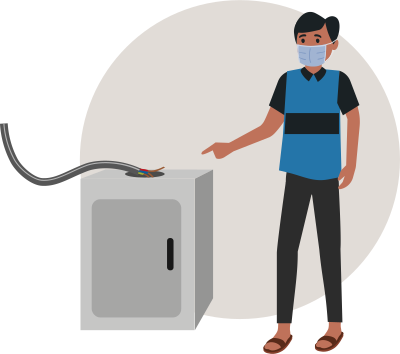
Electrical Safety

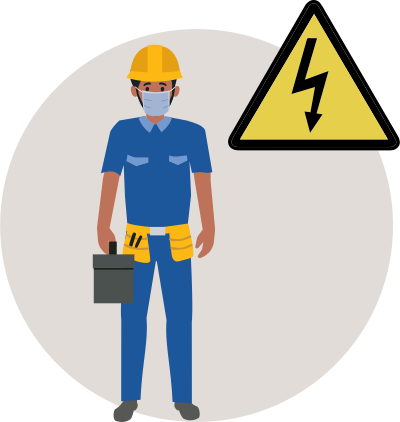
Electricity is one of the most basic needs in life, but electrical hazards can become life-threatening. Electrical safety means identifying dangers related to the use of electricity and to taking precautions to avoid damage, injury or death.

What is the danger?

Electric current flows through every object that is connected to an electrical power source (e.g.: socket).

Electrical energy can also cause short circuits resulting in severe burns, injuries and, ultimately, fires.

If this current flows through the human body, it can be life threatening.

Electricity can cause serious injuries including electrical shocks, electrical burns and electrocution.

Electrical safety precautions protect against electrical shocks and burns.

Before starting work, always check the condition of the equipment or devices to be used at work.

Please check

  • Is there any visible damage?
  • Are any cables or plugging devices damaged?
  • Are the cables protected properly with stress relief where needed and bend protections at cable entry points?
  • Are light switches or power sockets damaged?

Regular inspection is important!

Common electrical accidents

Arc fault

An arc occurs in the event of a fault. It is usually caused by unintended contact between two electrical conductors (short-circuits).

The current flowing between these conductors is called short-circuit current.

Possible consequences

  • Effects caused by heat, e.g.: burns, fire, pressure waves, melting of metal, etc.
  • Eye injuries, e.g.: blinding of the eyes or electro-ophthalmia
  • Lung injuries due to breathing in hot gases
  • Hearing effects, e.g.: injury to the hearing organs due to excessive noise

Electric current passing through a human body

When an electric current passes through the body, the person becomes part of the electrical circuit.

How dangerous it will be for the human body depends on the following factors:

  • intensity of the current
  • voltage
  • duration of the current flow
  • path of the current passing through the body
  • body transfer resistance

Note: Depending on the severity of the factors mentioned, the effects may range from a light electric shock to burns and even death.

Secondary accidents

Secondary accidents happen when the electric current flows through the human body at low voltage and only for a short time .

Electric current related injuries usually do not occur in secondary accidents.

Secondary accidents often occur caused by

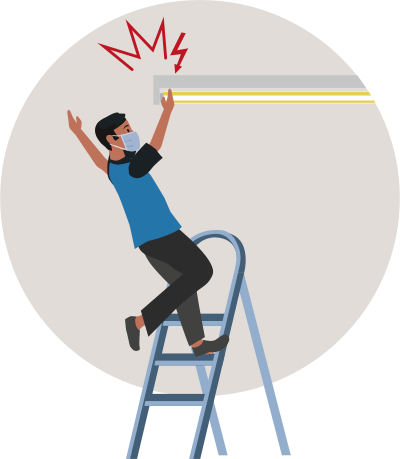
  • Falling (from a height) – a person is carrying out work on a ladder and falls off because of the sudden reaction due to the exposure to electricity
  • Injuries, e.g.: cuts, stabs, bruises, etc., caused by quickly withdrawing your hand from from the danger zone
  • Abrasions caused by sharp metal edges or similar objects
  • Falling objects may also cause injuries

What to do in case of an electrical accident

Cut the power source

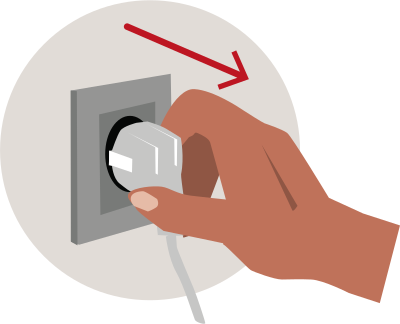
Switch off the device, pull out the power plug or unscrew it using the fuse or flip the toggle switch of the fuse.

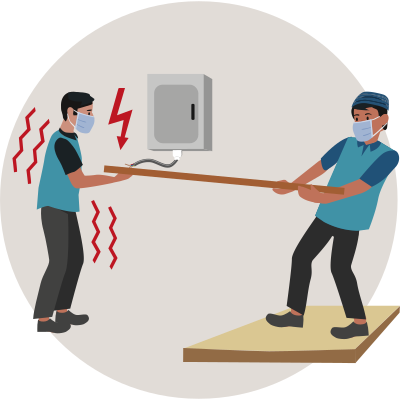
Separate the person from the source of electricity. Do not touch the victim directly!

If cutting the power source is not possible, separate the injured person from the power source by using non-conductive objects (e.g. a wooden broomstick).

Note: Do not touch the injured under any circumstances, otherwise your life will be in danger.

Take first aid measures

Qualified first aiders should always be present at the factory. First aid measures should be taken by trained first responders.

If no first responder is available, the persons present are obliged to provide first aid immediately (e.g., heart and lung massages).

Immediately see the company physician

In order to check for any injuries, an examination must be carried out by the company doctor.

Note: In case there is a fire caused by an electrical incident; follow the advice on fire safety mentioned in this app.

What you can do to ensure electrical safety

Do not manipulate or modify safety devices!

  • Only use the appropriate switches and do not manipulate any safety devices.
  • Do not open protective covers and access points on electrical equipment or switch cabinets without authorisation.

Do not carry out repairs yourself!

  • Do not carry out any repairs to electrical equipment and do not tamper with it.
  • Repairs may only be carried out by qualified personnel appropriately assigned.

Report any damage or fault immediately!

  • Report any damage to electrical equipment or any special incidents to the supervisor or qualified personnel immediately.
  • Stop using faulty equipment and prevent any further use by others.

Observe the surrounding area!

When using portable devices (e.g.: electrically operated hand tools), the surrounding conditions at the workplace must be considered.

Please always ensure

  • that the function of the devices is not impeded by prevailing moisture or chemical substances.
  • that the devices can be used safely in a potentially explosive environment.