Lifting, carrying and pushing

Correct lifting, carrying and pushing is easier for your body and helps to maintain your performance. 

Safety shoes

When transporting a load you can always

  • slip
  • drop the load
  • drive the transport vehicle into your legs or over your feet.

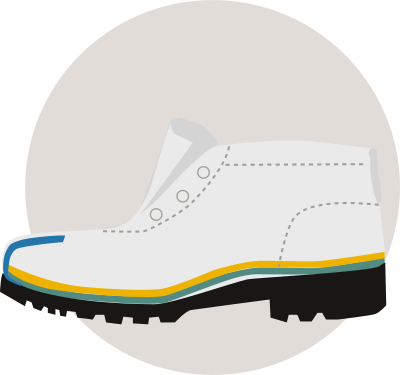
Therefore, it is important to wear well-fitting shoes with a non-slip sole. Safety shoes also have stable heels and sturdy caps over the toes. This makes sure that heels and toes are protected.

Tip
Make sure that your safety shoes are comfortable and fit perfectly.

Load securing

Always transport the load secured.

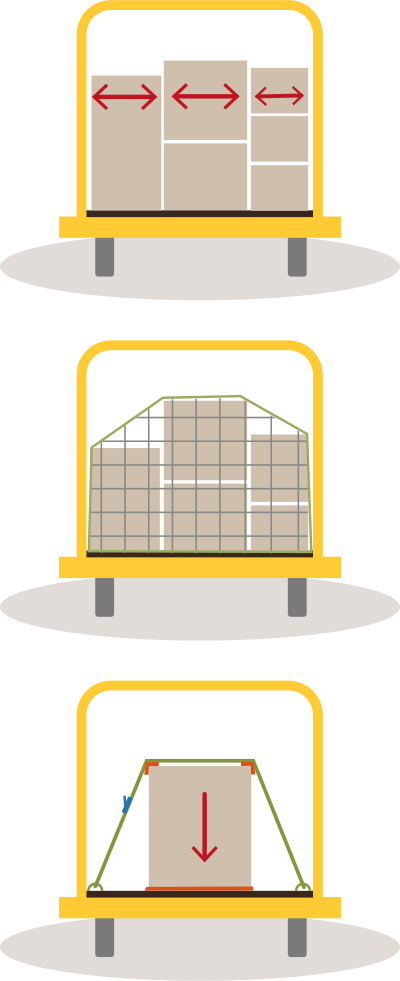
There are different ways to make sure that load cannot lose its secured position:

  1. Form-fit load securing
    Make sure that the load fits perfectly in the transport vehicle – which means that it has to fit into
    • both sides and
    • front and rear.
  2. Tie-down load securing
    You can use, e.g. netting or straps as shown in the picture. Additionally, use anti-slip-mats placed on the floor.
  3. Combined load securing
    This is a combination of No. 1 and No. 2 load securing.

Tip
Make sure the floor of the vehicle is clean before loading.

Correct lifting  

Correct lifting is easy. Keep the weight as close to your body as you can.

This helps to protect your spine. 
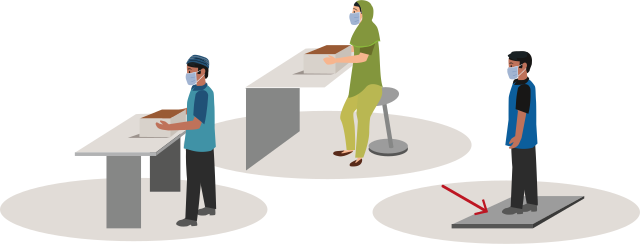
Lifting from a platform is better than lifting from the floor.

Carrying heavy weights 

Never carry heavy loads alone. 

Do not carry more than an absolute maximum

  • for women: 30 kg
  • for men: 40 kg

On a regular basis, do not carry more than

  • women: 15 kg
  • expecting: 5 kg
  • men: 15 kg

Use mechanical equipment

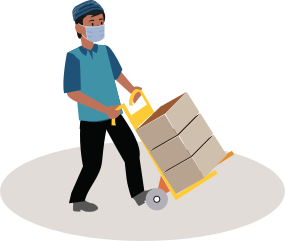
The best way to prevent back injuries associated with material handling is to eliminate the manual work by using mechanical equipment. So, use carts, hand-trucks or other vehicles when moving materials.

This makes your work easier and keeps you healthy. 

Pulling and pushing

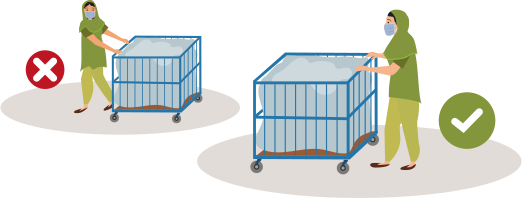
One-sided pulling involves twisting the upper part of your body, which is not favourable for your spine.

Do not twist your body when pushing. This good posture will keep you fit for a longer time. 

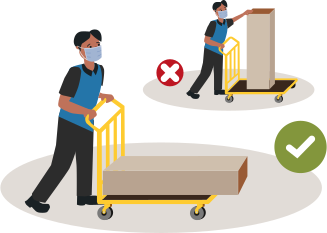
Transport loads horizontally 

Loads lying flat cannot fall over.

This makes it easier to manoeuvre loads.  

Maintenance of transporting devices 

Use brakes when loading or unloading.

If a wheel is defective, replace it immediately.

Moving objects

When moving objects, please move your legs. Do not stand still while moving the objects.

Leg movement spares your spine, hips and knees from being strained unnaturally.
Use lifting and stacking aids to avoid lifting loads from the ground.  

Standing up long

Standing up all the time is very tiring and causes pain in the back, legs and feet.

Good support:

  • standing aid (e.g. a stool with a footrest for sitting down occasionally)
  • a soft floor mat
  • good work footwear with a cushioned sole

Job rotation

Switch between different tasks whenever possible.

Alternating working positions help to protect the different parts of your body. It brings variety for body and soul.