Dyeing

Working safely includes proper handling of chemicals, which means a good deal more than using Personal Protective Equipment (PPE) only.

Working with chemicals

Be careful when working with chemicals.

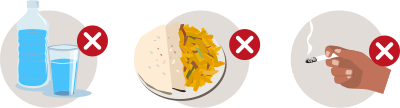
Do not eat, drink or smoke in areas where dyes are handled.

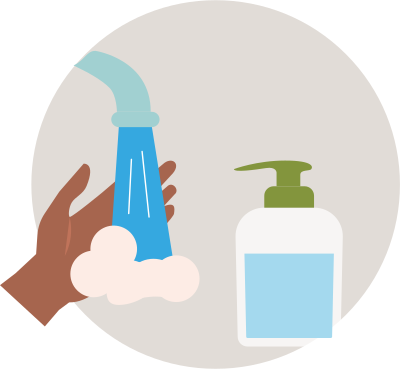
Wash your hands carefully before eating, drinking or smoking.

Keep your surroundings clean

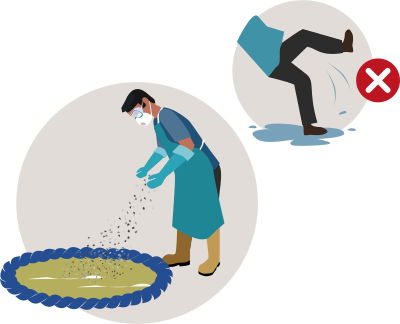
Make sure that you remove liquids from the floor immediately. This helps to keep you and your environment safe.

If spilled liquid dye solutions are allowed to dry out, they may release harmful dust particles. Wipe up dye solutions immediately.

Tip
Wet floors may cause slipping.

Dyes need careful handling

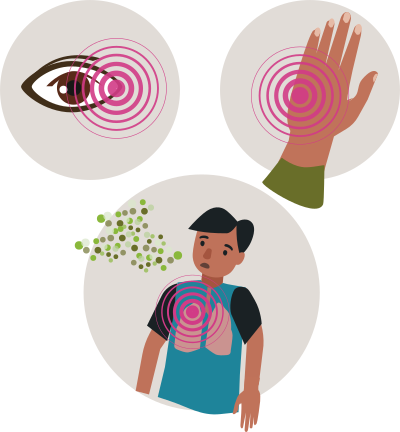
There are many different dye products in commercial use. Some reactive and disperse dyes may cause allergic skin reactions. Some reactive dyes can also cause respiratory irritation. Inhaling dust from such dyes may cause occupational asthma.

Tip
It is very important to minimise exposure to dyes of all types.

Fixed guards in danger zones

Missing safety systems between rollers or between rollers and fabric may lead to serious accidents, possibly resulting in amputations.

Tip
Make sure fixed guards are always in their correct positions.

Handling dyes at the weighing station

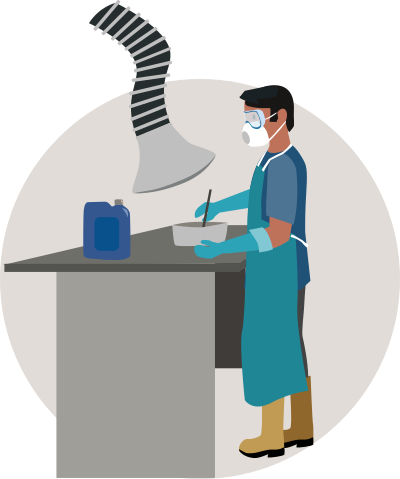
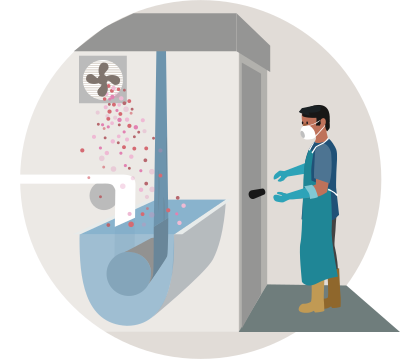
Weighing the dyes should always be carried out using nearby exhaust ventilation.
Dyes with a minimum dust level, such as in granular, dust-reduced or liquid form, reduce exposure.

Tip
Make sure exhaust systems works properly.

Personal Protective Equipment

Working with dyes requires strict cleanliness and use of suitable protective clothing:

  • work with exhaust systems only
  • wear an FFP2, N95 or comparable mask
  • wear safety goggles
  • wear gloves with long cuffs
  • wear a chemically resistant apron
  • and handle powder and solutions carefully.

Tip
Make sure that dye powders and solutions never come into contact with your skin or lungs.

In case of contact, act immediately

Clothes: change them immediately.

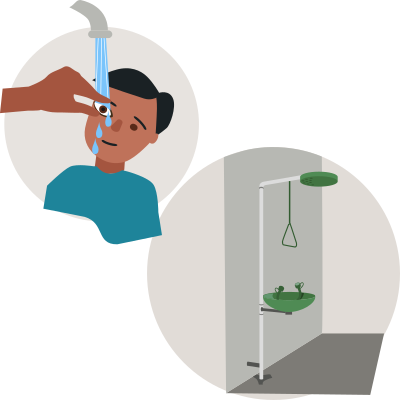
Skin: remove the chemical under running water.

Note: a washing facility must be close by.

Eye: rinse the open eye under running lukewarm water for 15 minutes.

Consult the doctor immediately and take the safety data sheet of the hazardous substance with you.

Tip
Train first aid procedures regularly.

Hydrosulfite and water

Make sure that there is no unplanned contact with water.

Hydrosulfite (chemical name: Sodium dithionite) is a white crystalline powder of pungent smell. The substance is used as a reducing agent in the dyeing process with vat dyes (e.g. indigo) or for the removal of faulty colours.

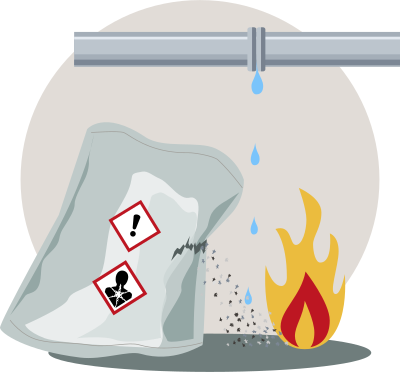
Hydrosulfite is stable when dry but self-igniting upon contact with water and humidity. Protect from moisture. Do not leave containers open, avoid spillage and contact with water. Make sure your equipment is dry before contact.

Watch out
If hydrosulfite meets with water, it reacts generating a lot of heat. This may easily cause fire in a store.

Tip
Always store it indoors.

Working with hydrosulfite

If possible, always use a fully automatic preparation machine.

If you have to mix it by hand make sure that

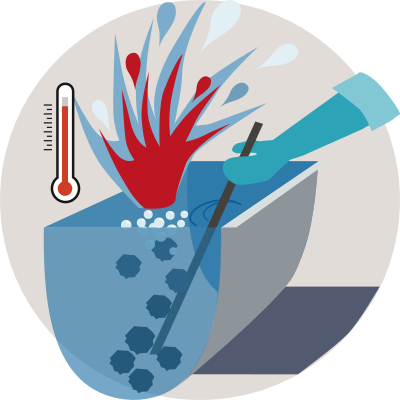
  • the temperature of the water is never higher than specified and
  • you insert the crystals slowly and evenly
  • with completely dry tools only.

There must not be any clusters before heating. The contact of crystals with warm water may cause abruptly boiling over. Stir well to avoid the formation of lumps. Sudden breakup inevitably leads to severe burns on body and face.

Tip
Handle hydrosulfite extremely carefully. Make sure the solution is thoroughly mixed while the water is cold. Do not add any hydrosulfite at a later stage when the water has become warm.

Formaldehyde-based chemicals – how to identify them

Textile finishing processes involve many chemicals that are irritating to eyes, skin and the respiratory tract.

These include formaldehyde-based resins. Formaldehyde is a colourless, strong-smelling gas, commercially used as an aqueous solution.

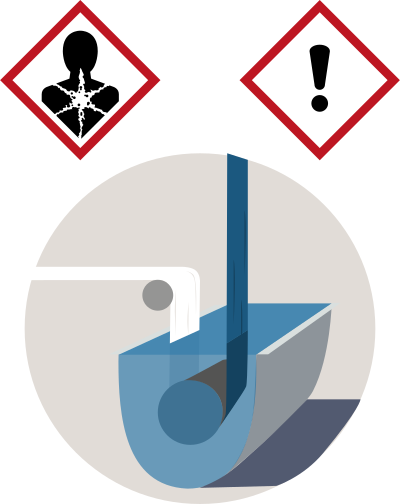
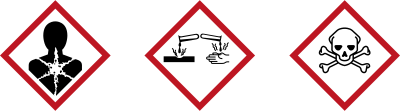
Fabrics are treated for all sorts of easy-care properties, such as anti-static, anti-wrinkle and anti-shrink. Substances should be labelled with these three hazard symbols when containing formaldehyde.

Workers can be exposed to formaldehyde during the treatment of textiles. Formaldehyde is mainly taken in via the respiratory tract, primarily through the mucosae of the nose and mouth, but to some extent also through the trachea and the bronchial tubes. Exposure may irritate eyes and the respiratory tract and may cause allergic skin reactions. Skin contact is possible when handling aqueous solutions of resins.

Prolonged exposure to high levels of Formaldehyde may cause cancer of the nasal cavity.

Tip
Keep contact with formaldehyde as low as possible.

Formaldehyde – keep concentration low

It is most important to keep its concentration in the air as low as possible. Therefore, housed-in workplaces with exhaust systems are required. Make sure all doors of the housed-in workplaces are are shut.

Tip
Use a self-closing system for all doors of the housed-in workplace.

Water tanks

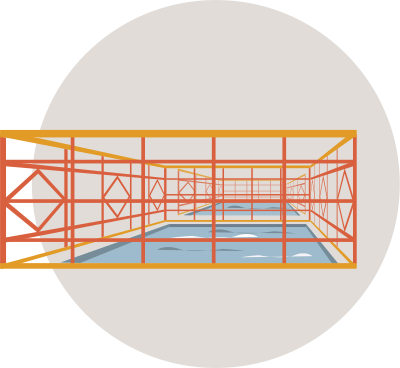
There must be safety rails to prevent anybody from slipping inside or getting into contact with chemicals or drowning.

Even if the liquid is only knee-high, a slippery bottom may hinder standing up, leading to fatal accidents.

Tip
Keep distance to water tanks.

Gloves for chemicals

Only use chemically resistant gloves that your chemical expert has chosen, because they must be suited to the specific chemical product to fully protect you.

Gloves come in various sizes – suitable for small to large hands. Make sure they fit your fingers and hands perfectly. This enables you to work properly.

Tip
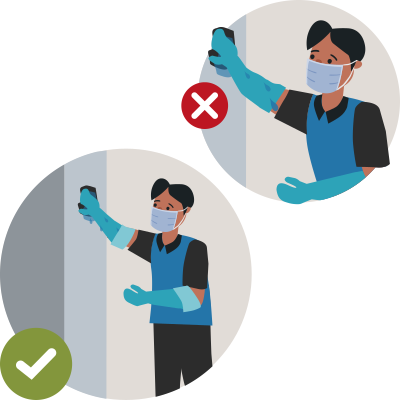
Use gloves as shown in the picture, rolling cuffs down to make sure no chemicals touch your skin.

Gloves – before use

Make sure

  • your hands are clean and dry,
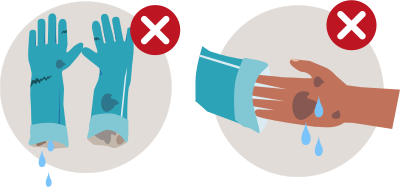
  • your gloves are undamaged and
  • your gloves are clean and dry inside.

Tip
Good hygiene practice requires gloves to be replaced regularly. Daily visual checks are necessary, and damaged gloves must be replaced immediately.

Gloves – after use

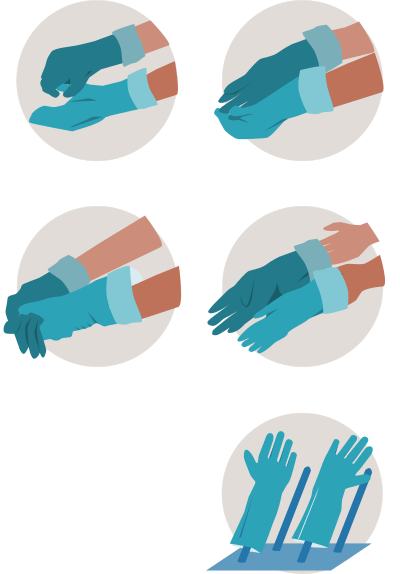
Clean and dry the surface of the gloves first.

How to take them off without touching the surface:

  1. Pull at the fingers of one hand,
  2. then the other hand.
  3. Continue as shown in the pictures.

Tip
Protective gloves get wet inside due to sweating. Therefore, gloves should be hung out and allowed to dry completely.

Safety goggles

Watch out
Safety goggles must be closed on all sides to make sure that no droplet may get into contact with your eyes.