Stay healthy and fit

What is prevention?
Prevention is any measure intended to limit health-related risks.

Why is prevention important.
Remember that sometimes we do not recognise problems immediately, but they may cause many long-term effects.

What’s next?
In this App, we will talk about health-related issues to give you a basic understanding to be able to identify your risks and take the necessary measures to prevent them as far as possible.

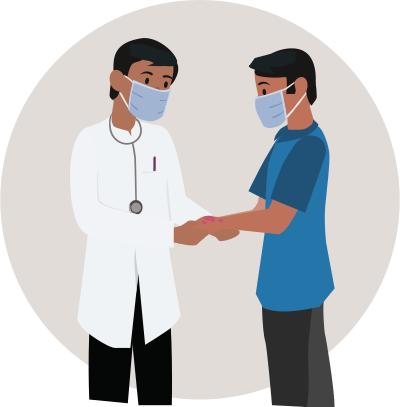
Your doctor and medical assistant can support you

Their tasks are to provide:

  • medical advice and prevention
  • treatment and therapy of injuries and diseases

They are also experts in:

  • ergonomics
  • chemical substances

Your doctor collaborates closely with, e.g.

  • OSH professionals
  • physical therapists
  • ergonomists
  • occupational hygienists

Tip
They can advise you on suitable exercises

  • to balance for the work you do,
  • to remedy your personal health problems.

Benefits of prevention

What are the benefits of prevention for the worker?

  1. less pain
  2. better mood
  3. better quality of life and higher life expectancy
  4. work can be done more easily

What are the benefits of prevention for the company?

  1. better quality of work
  2. less sick leave
  3. fewer problems finding new staff quickly, especially for highly specialized jobs

In case prevention failed

Visit the factory health service in case of health problems.

Give a good description of

  • your health problems
  • your work and working conditions
  • any chemical substances, dust, etc., you are exposed to or body postures you need to take.
  • the personal protective equipment you use

If possible, have the doctor or the medical assistant visit your workplace.

Tip
The more the doctor is informed, the better the help you can expect.

Work-related hazards in the garment sector

Common musculoskeletal disorders are

  • lower and upper back pain
  • neck pain
  • shoulder pain
  • pain in the hip joint and in the knees
  • pain in the elbow and in the wrist.

Please follow the “lifting, carrying and pushing”, “ironing workstations”, “sewing workstations” and “standing workstations” sections of this App for prevention.

Nickel allergy

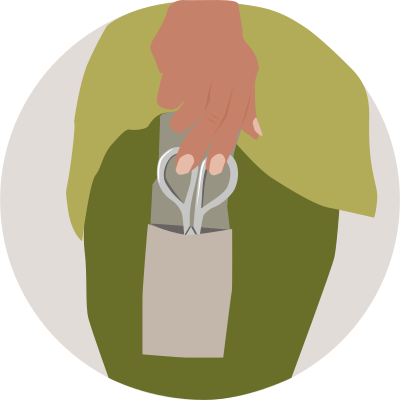
Nickel is a common metal used in everyday items, such as bling jewellery, coins, keys, cell phones, apparel (zippers, buttons, clothing fasteners), scissors and needles.

Sweat leaches nickel from many types of metal. This free nickel is then absorbed by the skin and can so cause an allergy.

The only measure for nickel-allergic persons is to prevent contact with the allergen. Creating a barrier between you and nickel may help. One option is to shield metal devices with plastic or protective coatings.

Tip
A test to determine if nickel is released from the surface of metallic devices (called a dimethylglyoxime test) is available commercially.

Severe burns

Burns can occur at different workstations like ironing and dyeing.

Please follow the “ironing workstations” and “dyeing” sections of this App for more details.

Tip
See the doctor, if the burn is larger than a 5 Taka coin.

Skin diseases

The skin is the protective barrier between your body and harmful impacts from your environment. Damaged skin barriers let allergens, dirt particles, germs and fungal spores penetrate.

Many chemical substances, little cuts, wet work, wearing dense gloves for a long time, etc., damage or destroy the uppermost skin layer.

Dust and rough work can also affect your skin negatively.

Ways of treatment can be: protective cream, nurturing cream, cut-resistant gloves, gloves with a protective film on the inner side, limitation of wearing duration, different types of gloves, different types of soap to wash one’s hands etc.

Tip
Visit the factory health service early to get the best treatment as soon as possible to avoid severe skin diseases.

Respiratory diseases

Chemicals as well as dust can create respiratory problems.

Excessive exposure to dust may lead to coughing, impaired lung functions, chronic bronchitis and even to fibrosis (scar tissue). Health effects may take years to develop. Symptoms may not appear until severe damage has occurred.

Avoid inhaling chemicals and dust as shown in the “chemical safety”, “dyeing” and “cutting and finishing” sections.

Tip
Use a vacuum cleaner or a wet method to keep floors and surfaces clean. Avoid using compressed air or dry sweeping.

Hearing impairment

Hearing impairment can be detected during a preventive medical check-up long before you realise that you cannot hear perfectly any longer.

Tip
Reduce noise whenever possible, for example, by regular maintenance of machines or other noise abatement measures like noise barriers. In case you cannot reduce it, e. g., reduce time spent in noisy areas and use earplugs.

Diseases caused by exposure to extreme temperatures

Not drinking enough causes various disorders, such as dehydration, dizziness, headache, vomiting, urinary burning, UTI or urine infection.

Please follow the “drinking water” section of this App, especially in warm surroundings like ironing workstations.

Additionally, e. g.,

  • enough and regular breaks, preferably in cooler surroundings
  • ventilation
  • air conditioning

are reasonable measures.