Female health risks

Health risks for female workers

A health risk is something that increases the likelihood of developing a disease.

Both females and males have many of the same health risks. But some risks can affect female workers differently, e.g. heart attack, depression and anxiety, arthritis and urinary tract infections (UTI).

In times of their biological processes of reproduction, women are especially vulnerable and face unique health issues, e.g.

  • during pregnancy and breastfeeding
  • during menstruation

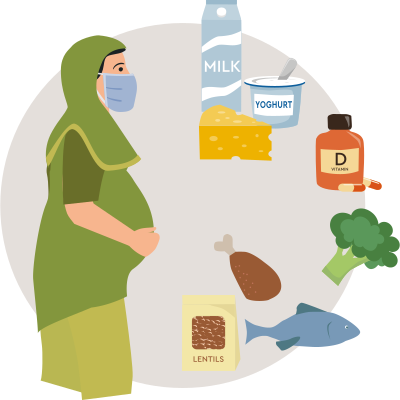
Healthy diet during pregnancy

During pregnancy, it is important to eat a well-balanced diet and to have a regular intake of vitamins, proteins, iron, minerals, folic acid, etc.

  • for calcium: drink milk, eat yogurt and cheese
  • for vitamin D: get food supplements and enough sunlight
  • for iron: eat green vegetables
  • for protein: eat lentils, fish and meat

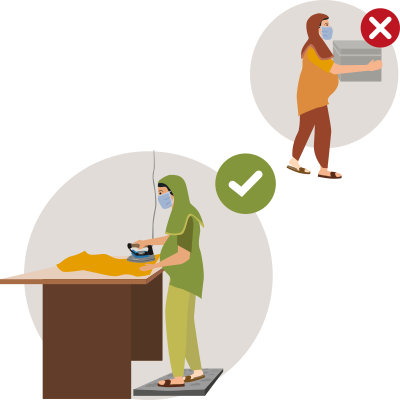
Pregnant at work

Pregnant workers should be allowed to have health-protective reassignments of their tasks.

Pregnant workers should not be assigned to any tasks involving lifting heavy loads or a potential threat to the musculoskeletal apparatus.

Pregnant workers should be assigned jobs away from indoor air pollution caused by dust, chemical compounds, smokes, chemical gases and so on.

Pregnant workers should be protected from noise and uncomfortable microclimatic conditions (too hot or too cold).

Maternity leave

Pregnant workers (after six months of employment at the company) shall be entitled to a total of sixteen (16) weeks of paid maternity leave (eight weeks prenatal and eight weeks postnatal leave).

No maternity benefit shall be payable to any woman if at the time of her confinement she has two or more surviving children, but in that case, she shall be entitled to the leave to which she would otherwise be entitled.

Source: The Bangladesh Labour Act, 2006: Chapter IV: Maternity Benefit section 46 (Right to, and liability for, payment of maternity benefit)

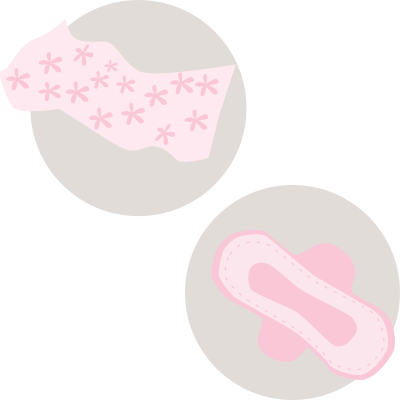
During menstruation

Use of cloth

  • Cloth should be changed every three hours max.
  • Textile scraps from the factory should not be used.
  • Cloths should be washed with soap, then rinsed in clear water and dried properly in the sun before re-use.

Use of sanitary pads

  • Sanitary pads should be changed every six hours max.
  • Dispose of used pads properly in covered bin.
  • Wash hands with soap and water after changing sanitary pad or cloth.

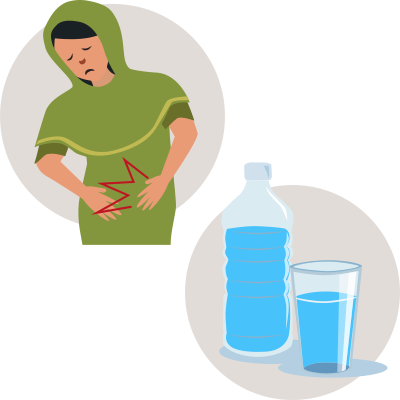
Water is important …

and for females even more, because females are more likely to suffer from urinary tract problems.

Did you know that holding urine back for long can cause urinary track infections?

Therefore, keep in mind to drink enough water and to take necessary breaks to urinate.

Please read the section on safe drinking water!

Gender-based violence

Are you aware of the legal and policy frameworks under the legislative structures that are addressing gender-based violence in Bangladesh?

The Women and Children Repression Prevention Act, 2000, introduced strict punishments for rape, sexual assault, acid attacks and dowry-related violence.

Bangladesh High court ruling to address sexual harassment in workplace and educational institutions in 2009 declared to address sexual harassment at the workplace and educational institutions. The judgement highlights actions including establishment of a Complaint Committee.

Do you know if there is a functioning Complaint Committee in your factory? 

In case you need support

A simple and effective complaint mechanism and redress system should be in place in the company to protect workers from gender-based violence.

For relief from mental stress, trauma or depression caused by family issues, physical harassment, abuse in the workplace, please call:

  • Government helpline number: 109
  • Government helpline for garments workers: 15357